

Introduction
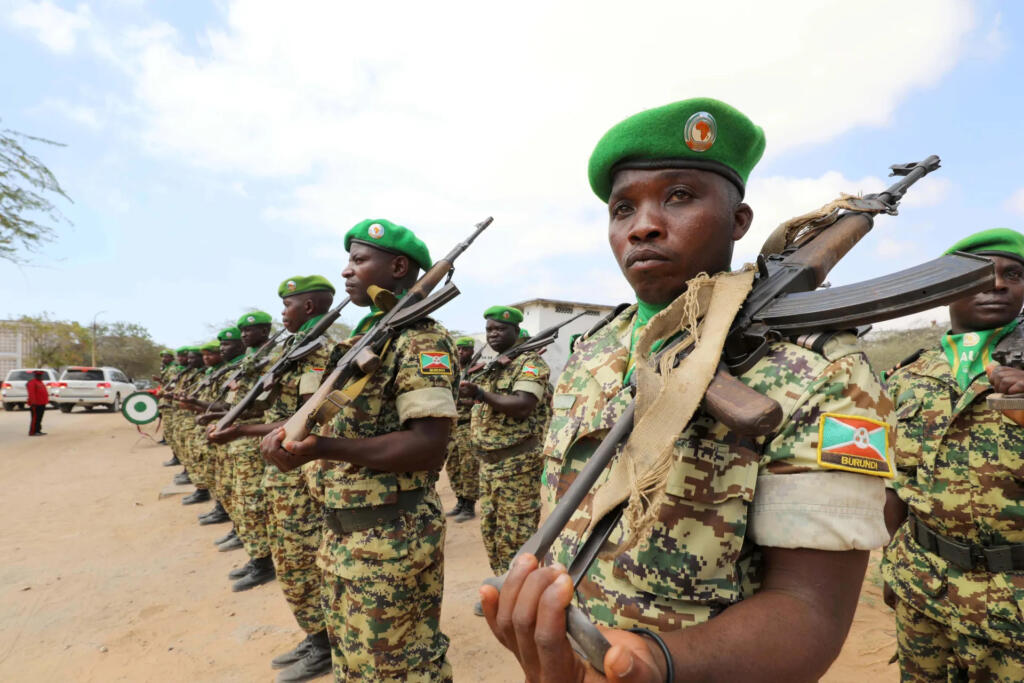
Building on its experience in reconciliation and its contributions in Somalia and the Central African Republic, the Burundian presidency will strengthen prevention, mediation, and the fight against terrorism in the Great Lakes region, the Horn of Africa, and the Sahel (where President Ndayishimiye is the AU Special Envoy). It will pay particular attention to the implementation of the African Youth, Peace, and Security Agenda and to supporting countries in transition. It will advocate for strengthened coordination between the Peace and Security Council (PSC), the Commission, and the Regional Economic Council (REC), with the aim of progressing towards the implementation of the “Silencing the Guns by 2030” agenda.
For decades, Africa has aspired to build a continent free from the scourge of conflict, where every citizen can live in dignity, security, and prosperity. This vision is fully aligned with Agenda 2063, the African Union’s strategic roadmap, which makes peace, stability, and good governance essential pillars of the continent’s development. Among its key aspirations, that of a peaceful and secure Africa reflects the shared desire to turn the page on the crises that have for too long hampered the continent’s transformation.
It is in this spirit that the ambitious “Silencing the Guns” initiative was born, aiming to end armed conflicts and significantly reduce violence by 2030. It reminds us that peace is not merely the absence of war: it encompasses prevention, mediation, reconciliation, social justice, citizen participation, and respect for human rights. It requires a determined commitment from states, regional economic communities, civil society, youth, and women, essential actors in African resilience.
Why this in Burundi’s presidency?
For Burundi, which will assume the presidency of the African Union in 2026, placing peace and security among its priorities is more than a political choice: it is a conviction forged by its history and by the lessons learned from its own journey of peacebuilding. Drawing on its experience in national reconciliation, intercommunal dialogue, and post-conflict reconstruction, Burundi intends to contribute, with humility but determination, to the continental effort to strengthen mechanisms for crisis prevention and management.
By making this a priority, he hopes to amplify the voice of countries that have demonstrated that it is possible to transform pain into hope and to build the future on restored stability.
Reaffirming this commitment today means recognizing that Africa’s security is essential for its sustainable development, the realization of its human and economic potential, and its role on the international stage. It also means recalling that peace is a choice—a courageous choice—that demands unity, solidarity, and visionary leadership.
By consolidating our achievements, correcting our weaknesses, and redoubling our political will, we can make Africa a place where every conflict is replaced by dialogue, where every weapon gives way to hope, and where the future of a proud and sovereign continent is built in peace.
Objectives
Accelerate the implementation of continental commitments on peace and security in order to create the conditions conducive to the achievement of Agenda 2063 and the sustainable development of Member States.
Priority Axes

- Strengthening prevention and mediation: Strengthen early warning mechanisms, preventive diplomacy and good offices.
- Strengthening the African Peace and Security Architecture (APSA): Improve coordination between AU organs, Regional Economic Communities (RECs) and regional mechanisms.
- Promoting African solutions to African crises African: Highlighting the role of countries contributing experiences in crisis resolution, including Burundi.
- Increased participation of women and youth in peace processes: Strengthening the inclusion and protection of the categories most affected by conflict.
- Reduction of structural factors of conflict: Supporting initiatives in governance, transitional justice, and social cohesion.
What should we expect from Burundi?
- Strengthened continental political commitment around the goal of “Silencing the Guns by 2030”;
- Increased cooperation between PAHA institutions and RECs for a faster and more coordinated response to crises;
- Promotion of good African practices in prevention and reconciliation;
- Systematic integration of women and youth in peace-related decision-making processes;
- Contribution to a progressive reduction of violence, tensions, and destabilizing factors.
Strategic scope
By placing peace and security at the heart of its mandate, Burundi aims to consolidate continental achievements and strengthen Africa’s resilience in the face of current and emerging threats. A more stable and united Africa is indeed the essential foundation for the emergence of a prosperous, sovereign continent that is fully in control of its own destiny.
Peace is not the absence of conflict but the ability to cope with it; security is not a fortress built once but a vigil kept daily. We fight for them because they are unnatural; left alone, the world tends toward entropy and the strong devouring the weak.